Why Packrafts Belong in Every Backcountry Hunter’s Kit
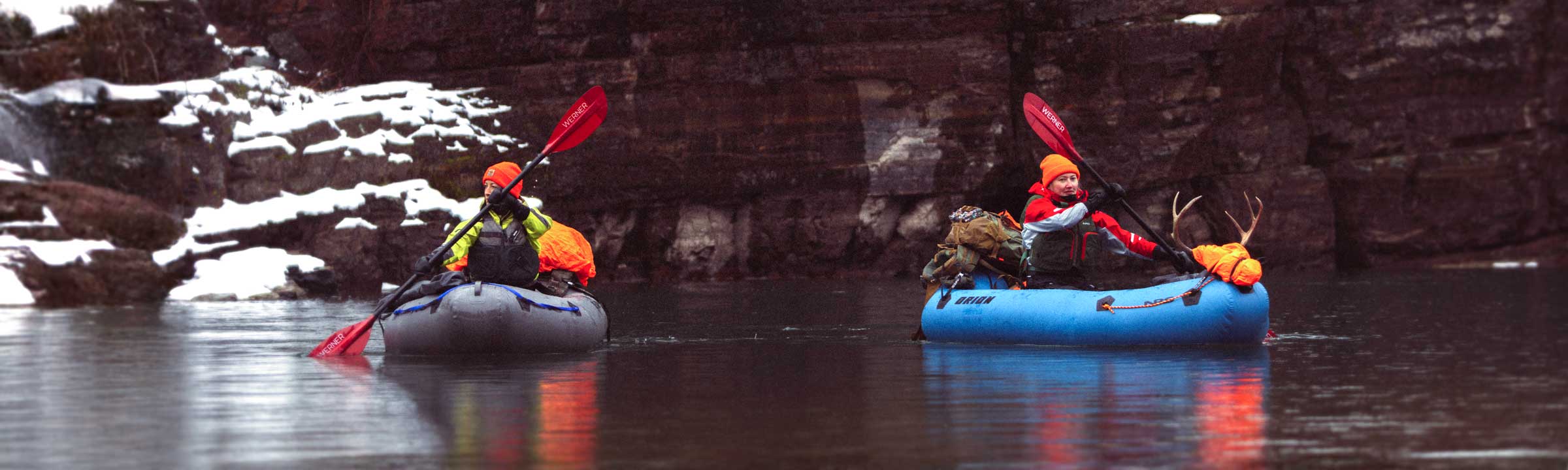
In the past decade, packrafts have gone from niche adventure gear to essential tools for serious backcountry hunters that are keen to find new ways to access habitat. Lightweight, portable, and surprisingly capable, these inflatable boats are changing how and where we hunt. They open up vast expanses of terrain, help haul heavy loads with far less pain and allow hunters to cover more ground—and water—with stealth and efficiency.
For you hunting/boating crossover people, it won’t take much convincing about the merits of packrafts. But for those of you who might be new to using a packraft for hunting, let’s get into the basics of gear, safety and some tips about using these tools for your pursuits.
Why Packrafts Over Other Boats?
My packraft is undeniably the most versatile boat in my quiver. I also have a 14' raft (set up for multiday rowing trips), two open tandem canoes, and two handfuls of hardshell kayaks in the backyard. When every ounce matters, and you’re going where no truck can follow, packrafts are the clear winner. Here’s why:
- Lightweight & Portable: A versatile hunting packraft should weigh 10–13 pounds. Rolled up, it should take up about the same volume as a sleeping bag. No other craft comes close to this level of packability.
- Total Access: With a packraft, you can cross rivers, drift through canyons, or slip quietly into swampy backcountry where other hunters simply can’t go.
- Multi-Purpose: At camp, the packraft makes a good couch and the floor can be used as a viable camp mattress. Float out with a quartered-out bull, black bear, or moose stowed inside the raft tubes.
- Packability: It’s way easier to pack a big animal into your packraft along with a week’s worth of camping equipment than any other small craft. I have a hard time even putting a turkey in my kayak.
Best Features in a Hunting-Ready Packraft
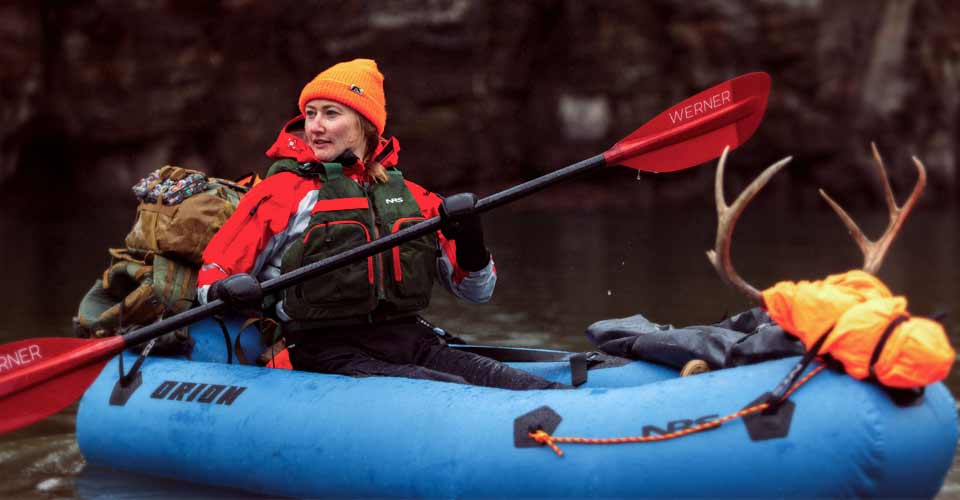
Hunting in the backcountry is rough on gear. Here's what to look for in a packraft that can handle meat, mountains, and miles of water:
- High Weight Capacity: Solo hunters should look for boats that can haul 300–400 lbs. or more. You’ll want room for you, your gear and game.
- Durability: TPU-coated nylon is the gold standard. Reinforced floors and rugged construction are a must.
- Internal Storage: This is a critical feature of a good hunting packraft. The zippered access allows for stowing everything from your camp gear, weapon, and, as mentioned above, an entire boned-out big game animal.
- Tie-Down Points: In addition to having ample internal storage, you’ll also need lash points for your pack, weapon, antlers and skull. It’s important to keep your top loads minimal, yet well secured and out of your way for paddling.
- Self-Bailing vs. Spray Deck: Self-bailing is my recommendation for the added flotation and ease of entry and exit. The downside here is that your legs and bottom are exposed to getting wet, but good lightweight waterproof pants or waders are more than sufficient.
Essential Accessories for Hunting with a Packraft
“Don’t pack your fears.” The most common mistake that novice backcountry adventurers (backpackers, hunters, kayakers, mountaineers, etc.) make is to bring some additional piece of gear for every possible setback that could be encountered on their trip. This is a major problem if you spend any time carrying said equipment. If I’m rowing an 18’ raft, I’m less concerned about taking an extra dry box to protect my cowboy hat. If I’m backpacking, I should think twice about taking fingernail clippers.
Don’t just grab a raft and hit the river—gear up wisely. Like any packrafting adventure, it’s important to balance being well-equipped without going overboard.
Here are some absolute essentials you’ll want to bring on any backcountry trip. Once the basics are covered, consider the specific needs of your adventure to round out your gear load.
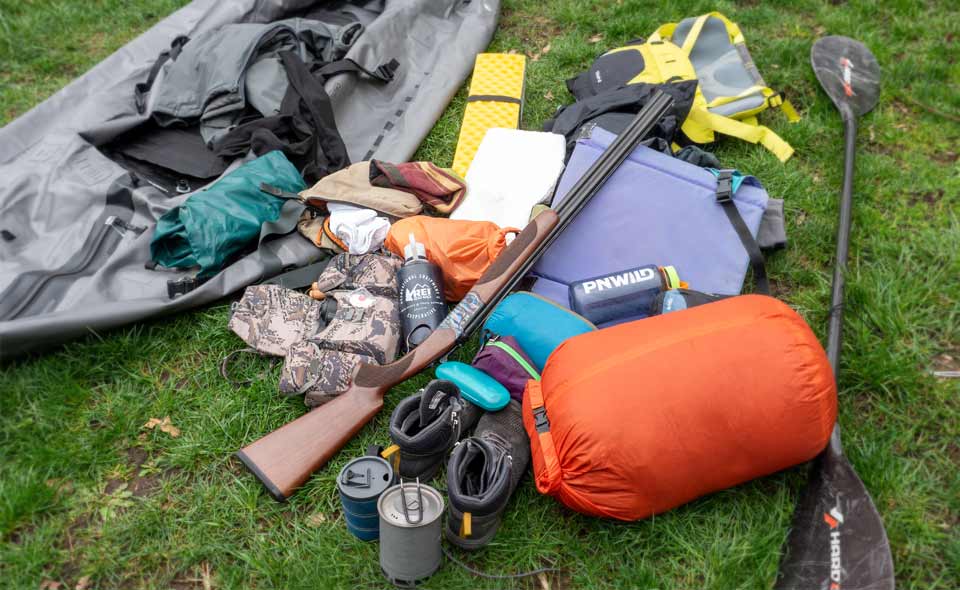
- Inflation: The included inflation bag and tube for topping off are critical to bring with. A K-Pump handpump is a good option for bringing your packraft up to pressure, and there are several small, light, battery-powered pumps on the market now, too.
- Paddle: Lightweight and compact, ideally a 4-piece breakdown paddle. Carbon fiber if you can swing it. Look for a longer shaft or paddle designed for packrafting that can easily reach over your tubes.
- Apparel: For most rivers, lakes, and mellow coastal paddling, good rain gear over your synthetic and/or wool hunting clothes is enough. Avoid cotton: once it’s wet, it stays wet.
- PFD: Go ultralight but don’t go without. Personal recommendations are the NRS Ion or Siren for comfort and durability. The NRS Vapor is the lightweight king.
- Repair Kit: A puncture in the wrong place at the wrong time can be more than inconvenient. Gear Aid’s Tenacious Tape and a small tube of AquaSeal, plus small, lightweight scissors are sufficient.
How to Pack Your Kit
Packing right means quicker transitions and safer travel:
- Keep Essentials Accessible: In the front of the packraft, I’ll keep my main backpack (in daypack mode). Inside will be items that I want readily available, like a camera, bear spray, water, snacks, and my chest harness with the usuals: binoculars, rangefinder, GPS device, fire kit.
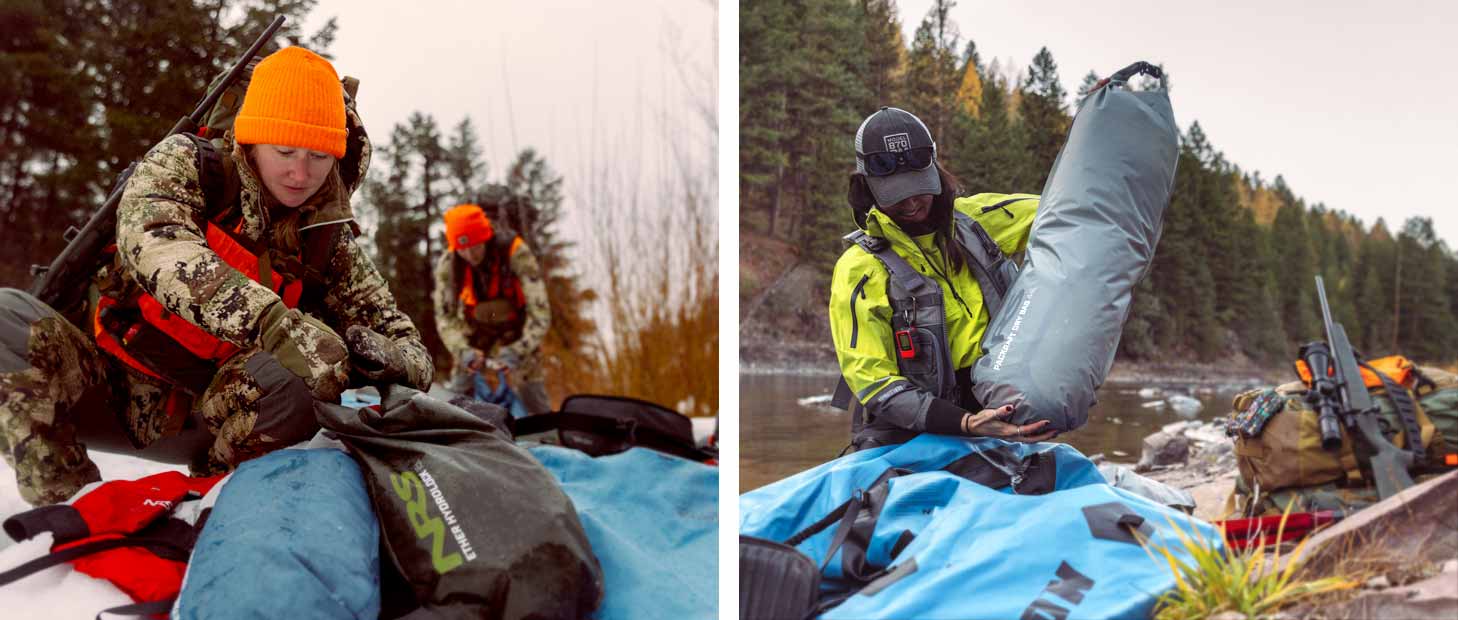
- Use Dry Bags Wisely: Label them by purpose—camp, meat, food—to stay organized. Packraft-specific dry bags are a great choice, as they’re designed to fit on the inside of the packraft’s tubes. Not everything needs to be inside a dry bag. Be judicious.
- Balance the Load: Keep the heaviest gear low and centered for stability. Consider the left / right balance more than fore / aft.
- Game Bags and Compactor Bags: I always like durable, cloth game bags to hang meat. However, I recommend putting those inside of compactor bags for a blood-proof and compact solution that is easier and cleaner to put inside a packraft.
- The Paddle Pack-Out: With most of the heavy stuff inside of the packraft, it’ll be necessary to have a considerable load topside as well. You’ll at least have the main pack stuffed with your food and camping gear. But also be prepared to strap this down, as well as any head/antlers that you’ll be packing out. The 3' and 4' NRS 5/8" Micro Straps are ideal for cinching down gear topside.
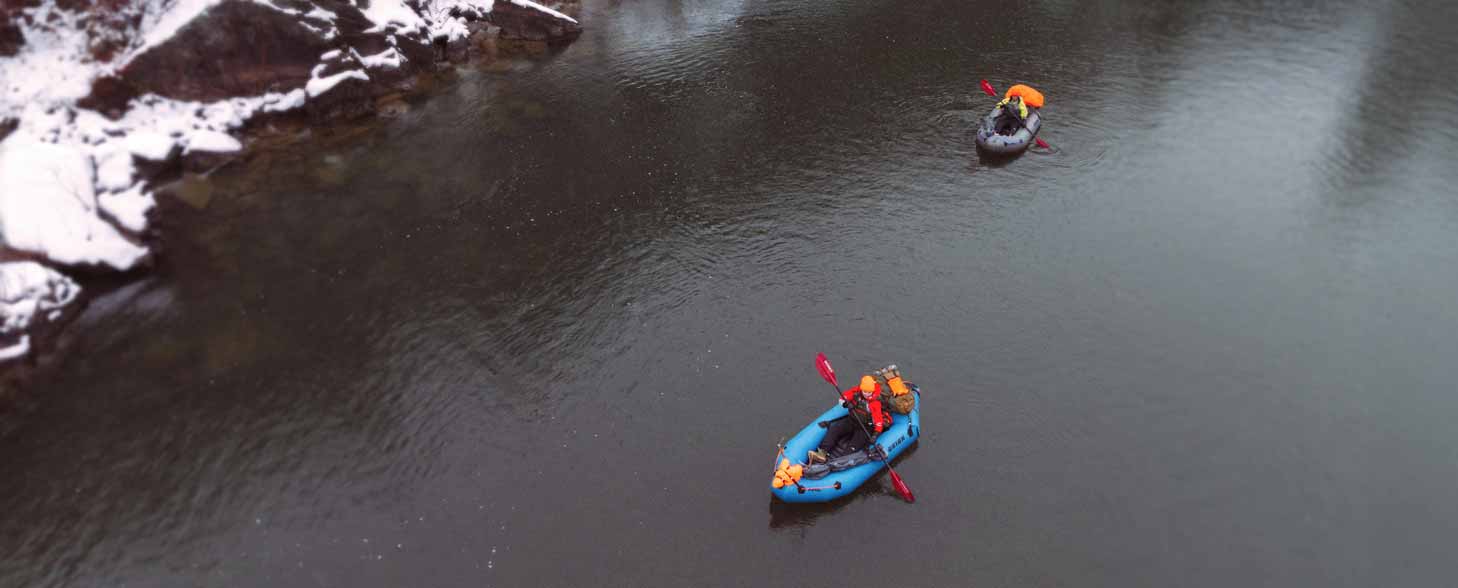
Three Ways Hunters Use Packrafts in the Field
I dream of getting flown into a flank of the Brooks Range, with a bag on my back, a rifle in one hand and a paddle in the other. I’d set out with a small group of friends, hiking and glassing for caribou, maybe calling for moose, thrashing bushes with the wooden paddle.
I dream of dragging my inflated packraft across snow fields and around log jams to access tributaries within the Frank Church River of No Return Wilderness. Early spring squalls spit sleet and roll over me as I sit under a tarp, tucked into a pair of binoculars or spotting scope looking for big black bear boars munching flowers and “green-up” in avalanche chutes.
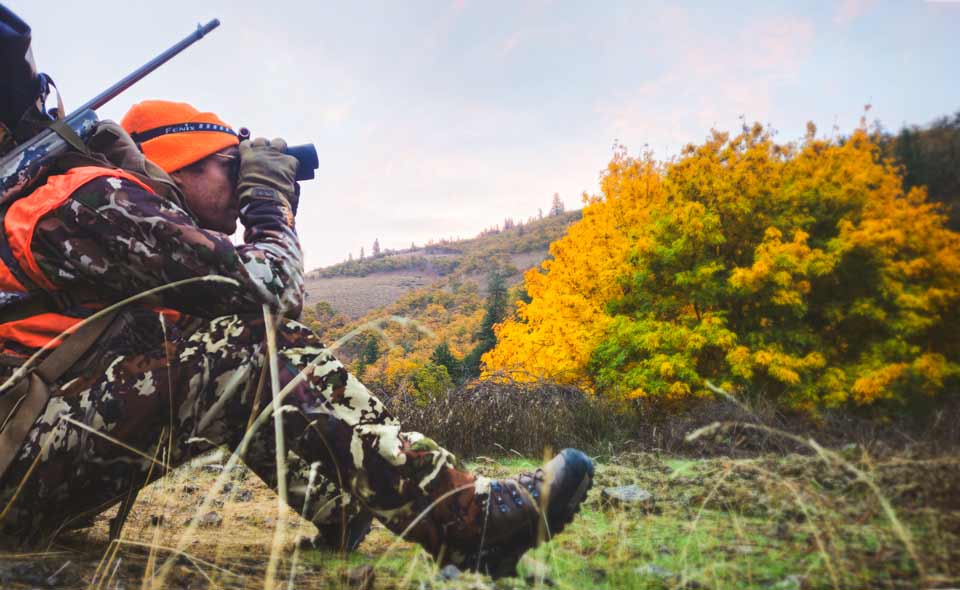
Not every hunting trip uses a packraft the same way. Here’s how they fit into different hunt styles:
Multiday River Hunts
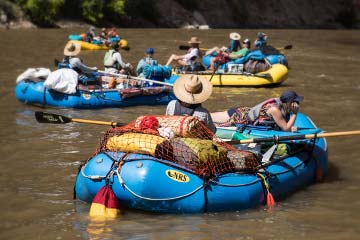
Some of the most legendary hunts in North America don’t start with a hike—they start with a boat launch. From the Lower 48 to the far reaches of Alaska, float hunts turn the river into your highway, your home, and your meat hauler. These aren’t casual outings—they’re full-on backcountry expeditions where you live out of a raft for days or even weeks, chasing game through country you can’t reach any other way.
Hells Canyon (ID/OR) is as wild as it gets: steep, rugged terrain and serious big game. The Middle Fork of the Salmon (ID) ups the ante with remote, unforgiving country and gnarly Class III-IV rapids. Oregon’s John Day River offers a mellower float, but don’t be fooled—it winds through prime habitat and delivers on opportunity. And in Alaska, rivers like the Noatak, Ivishak, and Kobuk are made for this kind of hunting: vast, wild, and teeming with game.
On a float hunt, your raft is your camp, your cargo hauler, and your only way out. Pack smart, know the water and be ready to earn every mile.
Hike & Raft Combos
These trips fall right in the middle of the spectrum—equal parts hiking and paddling, and arguably the kind of trips packrafts were built for. These hunts weave together long alpine ridgelines, rugged mountain passes, and deep backcountry routes, using lakes and rivers not as destinations but as vital links in the chain.
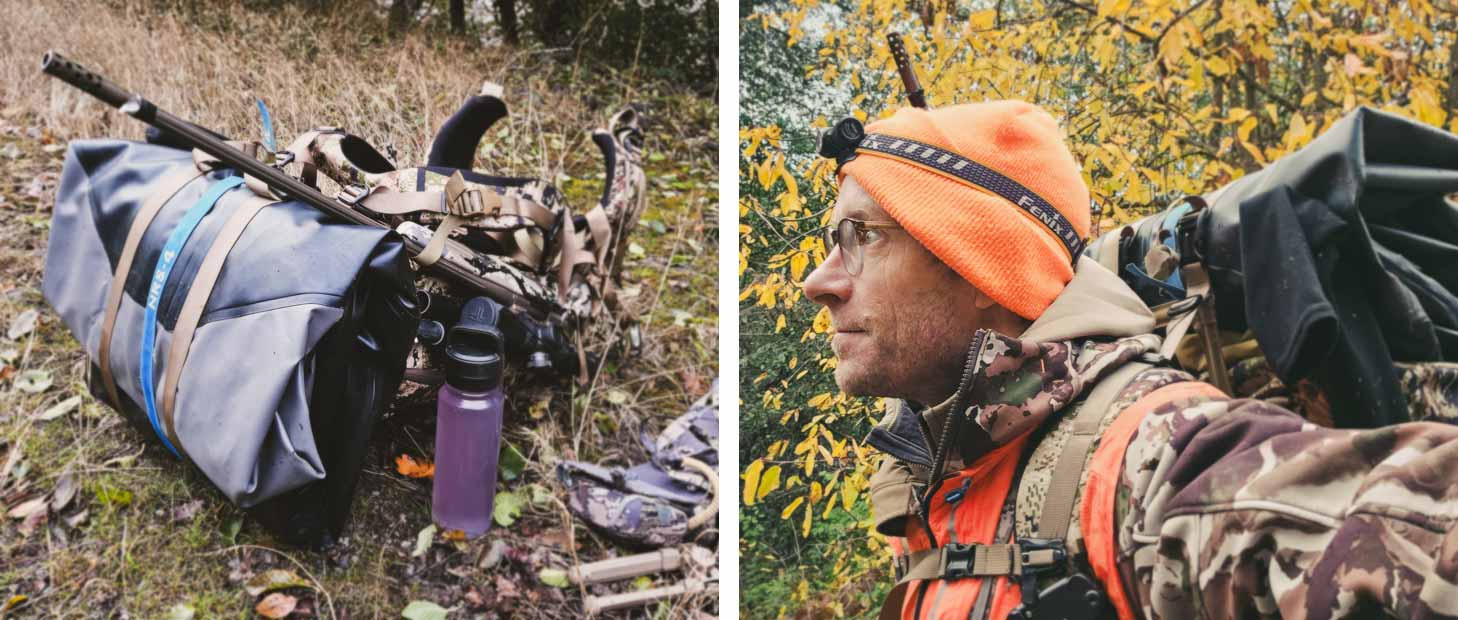
You're not simply traveling through terrain—you’re solving it, piecing together smart, efficient routes that would be impossible on foot alone. From stalking high-country mule deer in the Rockies, to coastal Alaska goat hunts, to full-on range crossings in the Yukon, this is where the packraft proves its worth as a hybrid tool. These trips demand strong legs and river sense in equal measure, and they reward hunters who think creatively about terrain.
Raft as a “Sometimes” Tool
The most understated, but often the most practical way to use a packraft. Here, the boat isn’t the star of the show, but it quietly saves the day. You might carry it to cross a glacial lake, float a swampy section in moose country, or fish a remote alpine pond. It lives in your pack or at basecamp, deployed only when needed. These aren’t headline hunts, but they’re where packrafts quietly earn their keep—making a hard hunt easier, opening terrain others walk past, and offering solutions when the map throws something unexpected your way.
Final Thoughts: The Packraft Advantage
Hunting is hard. Hauling meat is harder. A packraft doesn’t make it easy, but it does make it possible.
Whether you're floating deep rivers, bushwhacking across watersheds, or keeping a raft rolled tight at camp, just in case—it’s one of the most strategic tools you can add to your kit.
Hunt smart. Float light. Go far.
About the Author
Adam Elliot grew up on the river. Whitewater has taken him across the globe, including 12 years as a commercial guide in the Grand Canyon and multiple Class V kayak expeditions. Says Adam, “I am a husband, a dad, a hunter, a businessman, a builder, and through it all, I am still a beginner.”
All images credit Adam Elliot unless otherwise noted.
 NRS Gift Card: Always Fits, Always Wanted