How to Fit a Life Jacket (PFD)
A properly fitted life jacket (PFD) is critical for safety on the water. This guide explains how to size, adjust and test a life jacket so it stays secure and performs as intended.
Article Contents:
How to Fit a Life Jacket (Quick Steps)
- Choose the correct size based on chest measurement and our provided sizing chart.
- Loosen all adjustment straps and put the life jacket on.
- Buckle or zip the entry closure, starting with the bottom buckle if there is one.
- Tighten the straps evenly from the bottom up for a snug, centered fit.
- Adjust the shoulder straps last.
- Test the fit by pulling up on the shoulder straps. If the life jacket rides up over the ears, it is too loose or too large.
How to Choose the Right Life Jacket Size
Your life jacket should fit snugly without being too tight. The term the Coast Guard uses is “comfortably snug.” If you can’t make your life jacket fit snugly, then it’s too big. If you can’t comfortably put it on and fasten it, it’s too small.
Here’s NRS Customer Experience Specialist Diamond demonstrating the “Goldilocks” test.
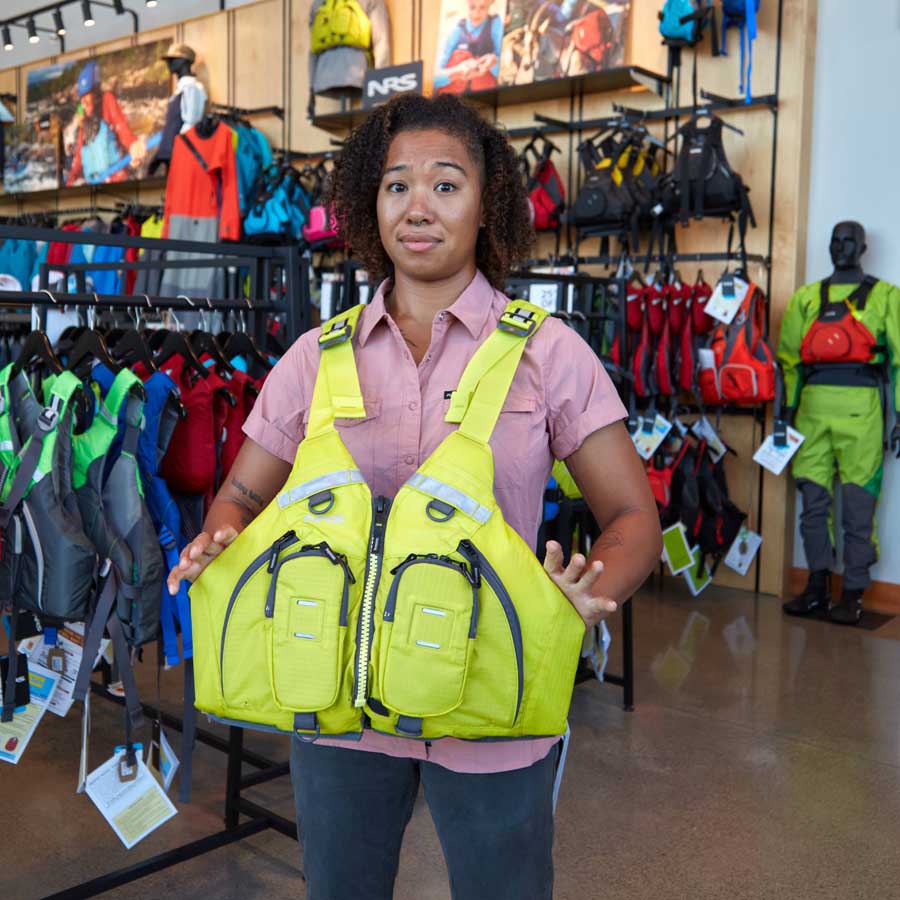
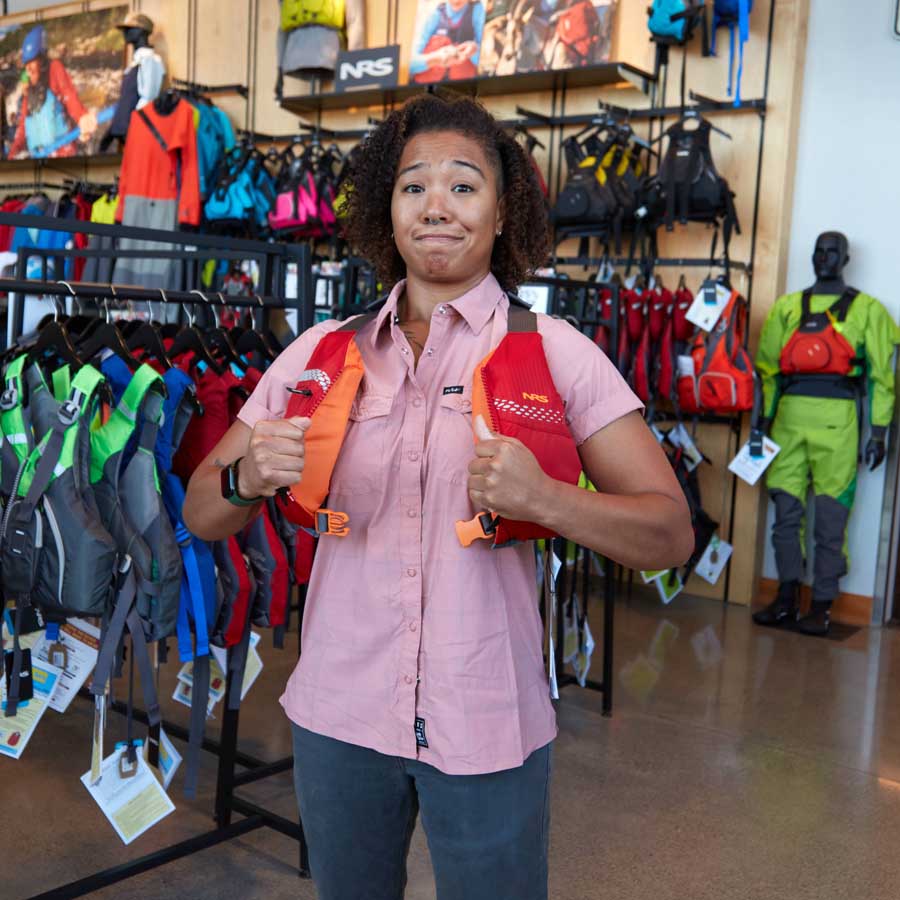
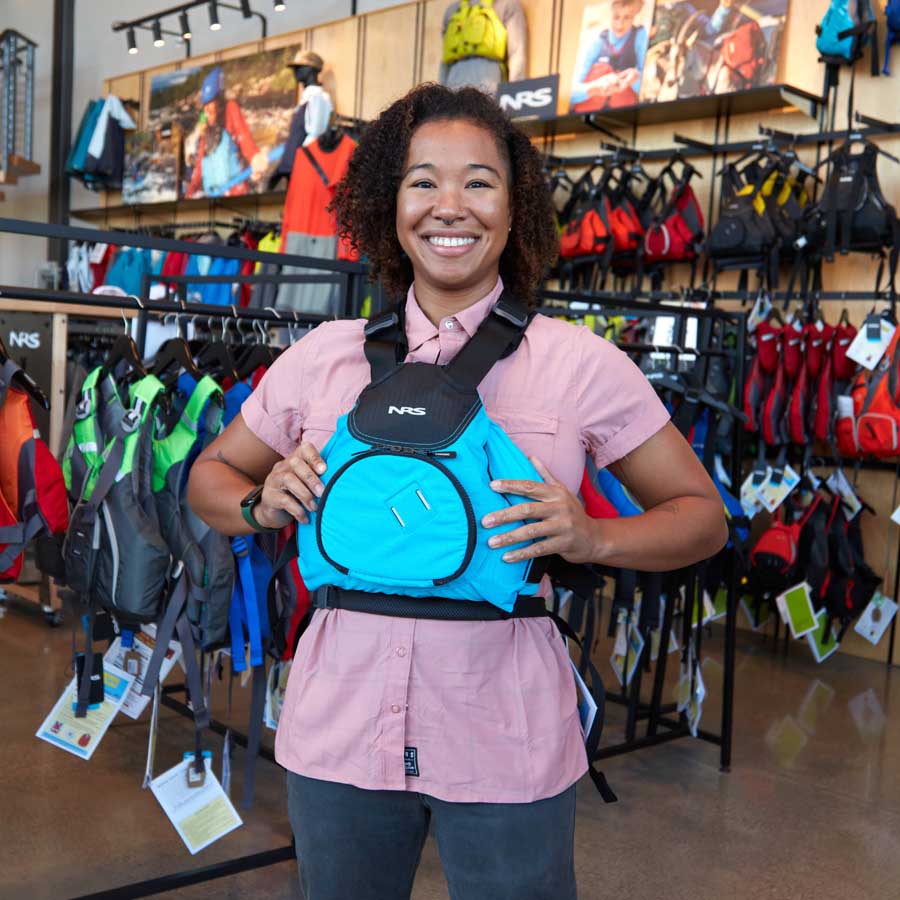
Okay, go finish your porridge, Diamond.
Every PFD manufacturer has its own sizing system, and it’s important to confirm sizing before purchasing any brand of life jacket. And of course, always try on a life jacket to be sure it fits before you hit the water.
NRS life jackets come in three size categories: Child, Youth and Adult. The first step toward finding the proper fit is to determine which category the person wearing the life jacket fits into. Finding your size is simple: measure your chest with a sewing tape and compare the measurement to the PFD manufacturer’s sizing recommendations. Weight can also be a determining factor depending on the manufacturer. Read the labels and choose accordingly.
Consider the Life Jacket Style
In addition to finding the right size, you’ll also want to choose a life jacket style that complements the type of boating you’ll be doing. We divide most of our life jackets into three categories.
- Low profile jackets are compact top-to-bottom, with thicker, more concentrated flotation panels that emphasize mobility. These are best suited for more active paddling such as whitewater kayaking and stand-up paddleboarding.
- Medium profile jackets cover more of the torso, but tend to have thinner panels and more pockets for accessories like snacks, sunscreen, or fishing gear. These are a great choice for the majority of paddlers.
- High profile jackets also cover more of the torso, but have thicker panels for maximum flotation. These are ideal for big water boating, or for non-swimmers who appreciate having that extra flotation.
Due to your cookie choices, we cannot show you this content. Adjust your settings?
Some styles of PFDs may fit your body type and boating style better than others. The best way to know you’re getting the right PFD is to head to your local paddling shop and try them on in person.
How to Adjust a Life Jacket for Proper Fit
Just having the right PFD is not enough to keep you safe. You have to wear it, and you have to wear it the right way.
Different models of PFDs have different systems for entry and adjustment, but the goal is always the same—a snug secure fit. It’s best to start with all the adjustment points loose, and then tighten them sequentially to ensure a good fit.
With the PFD positioned midway around your torso, start by buckling the bottom buckle, if one exists, and fastening the entry, be it a zipper or buckles, on the side or in the front. That bottom adjustment is critical to preventing ride up; it helps “anchor” the jacket.
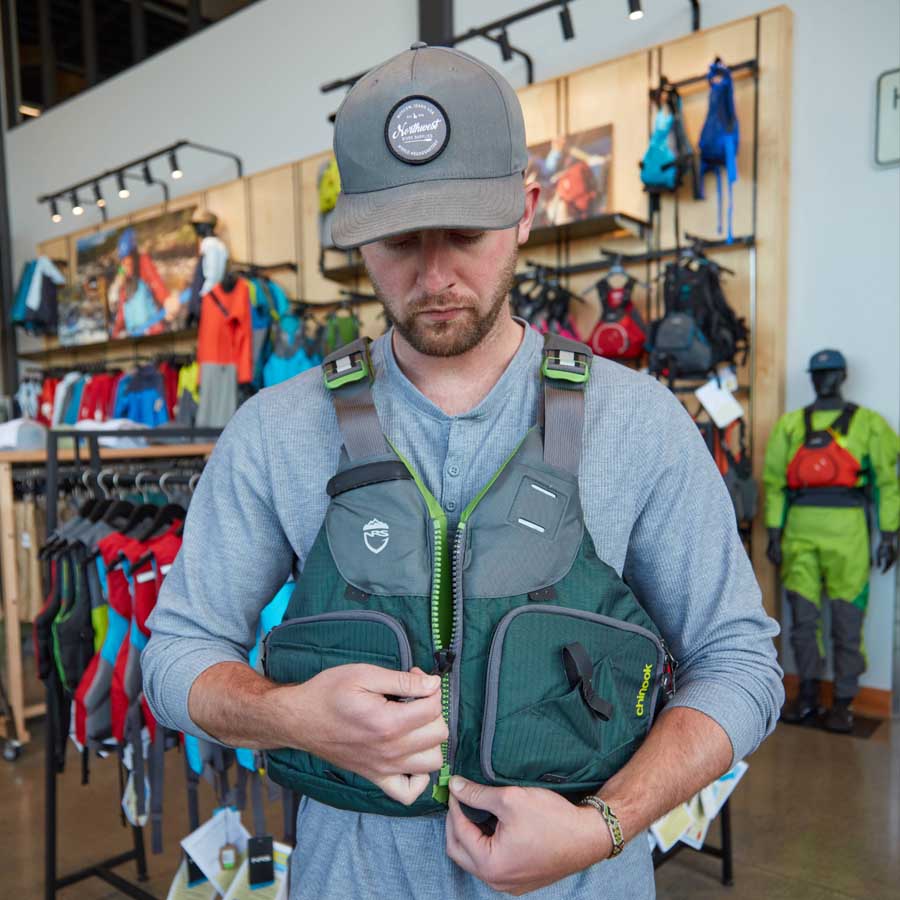
Working from the bottom to the top, tighten the adjustment straps by pulling forward on both sides at the same time. You can also hold the straps in each hand and shimmy the straps, which alternates tightening but in equal increments. The point is that if you tighten one side first, you run the risk of creating a lopsided fit. You want the jacket to remain centered on the body.
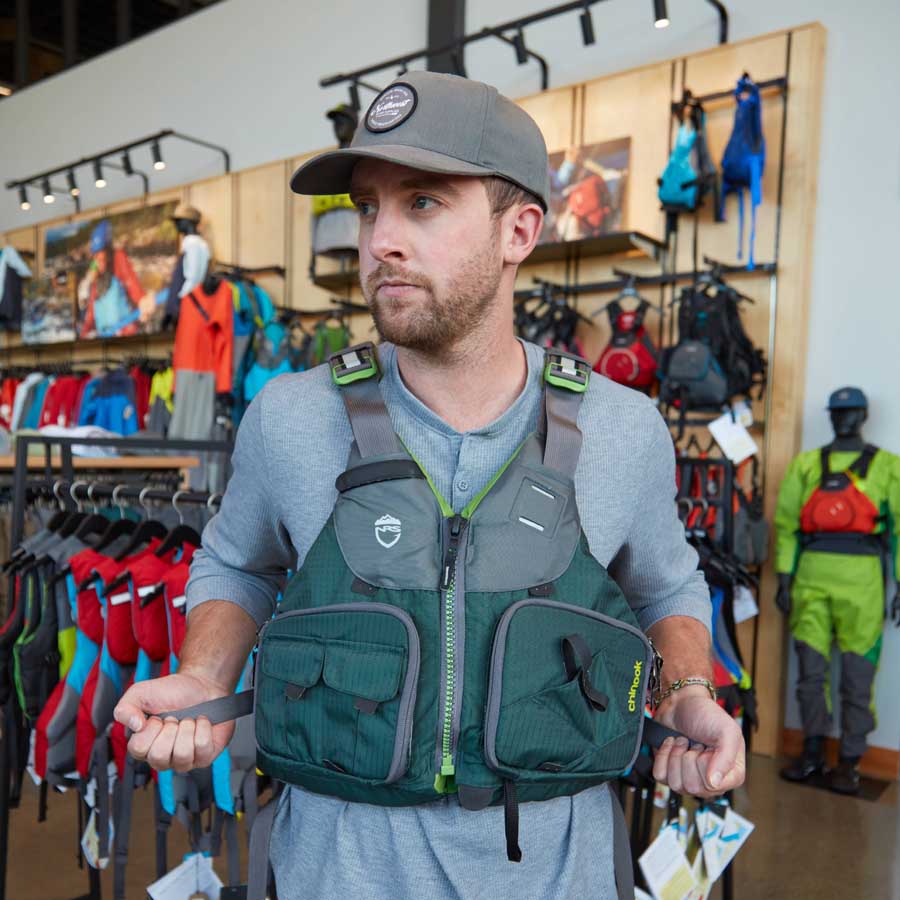
While it may seem odd, the final step is to tighten the shoulder straps. Again, it’s ideal to do this either at the same time or with equal increments.
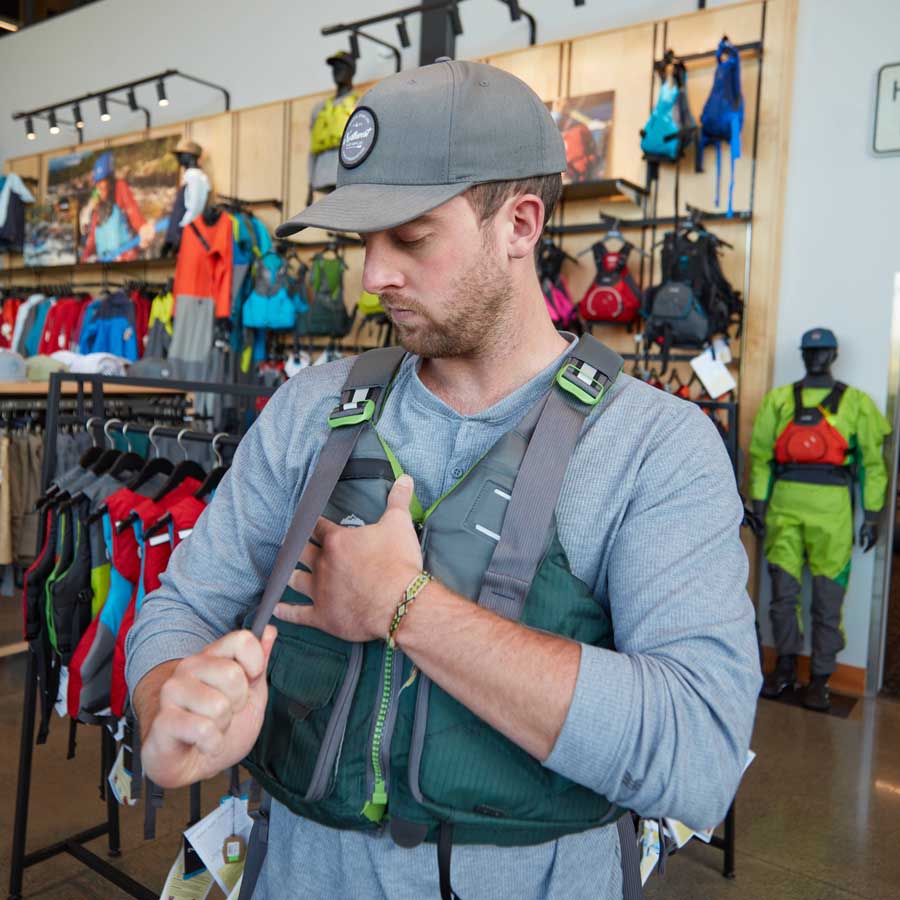
Once comfortably snug, have a friend or staff member test the fit by pulling up on the shoulder straps. If the PFD stays in place, it’s properly fitted. If the PFD slides up around your ears, then it’s either too big or maybe not the best design for your body type.
A properly fitted life jacket should feel comfortably snug and should not ride up over your ears during a lift test. If it rides up, the life jacket is too loose or too large.

Fitted and ready to paddle, be sure to tuck away any excess straps. If your PFD has strap garages, tuck the straps into the hole and out of the way.
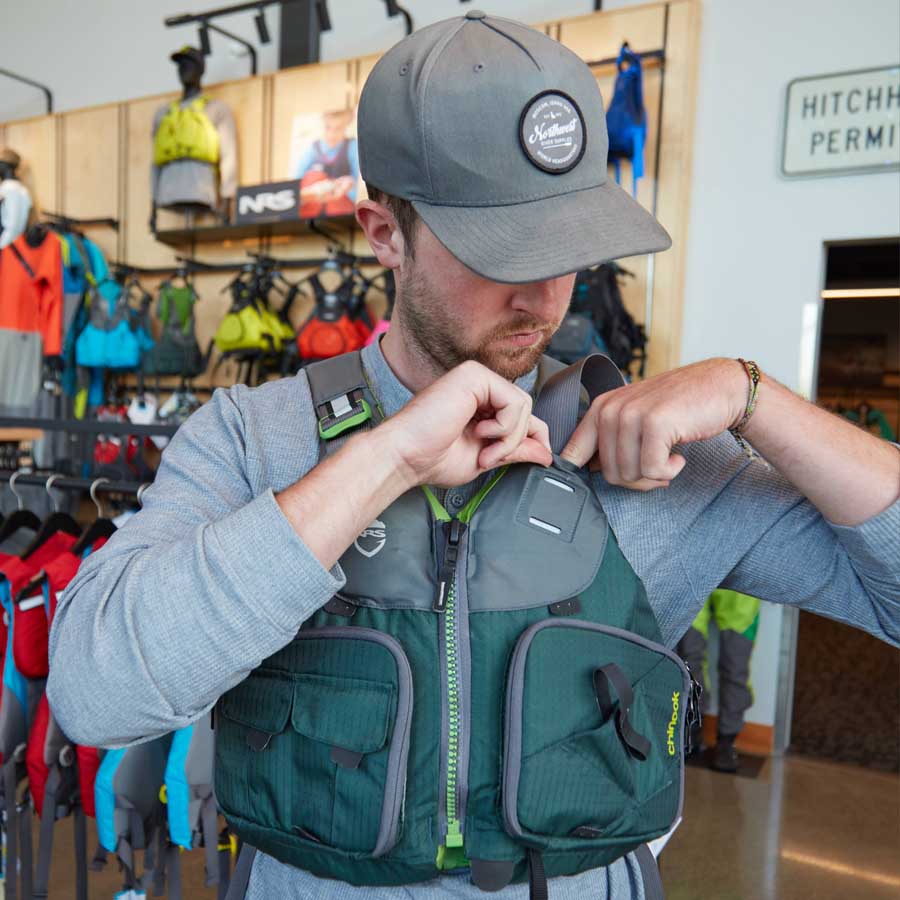
Finally, adjust your PFD for that comfortably snug fit. Loosen the straps, then tighten them snugly, starting at the bottom and working up.
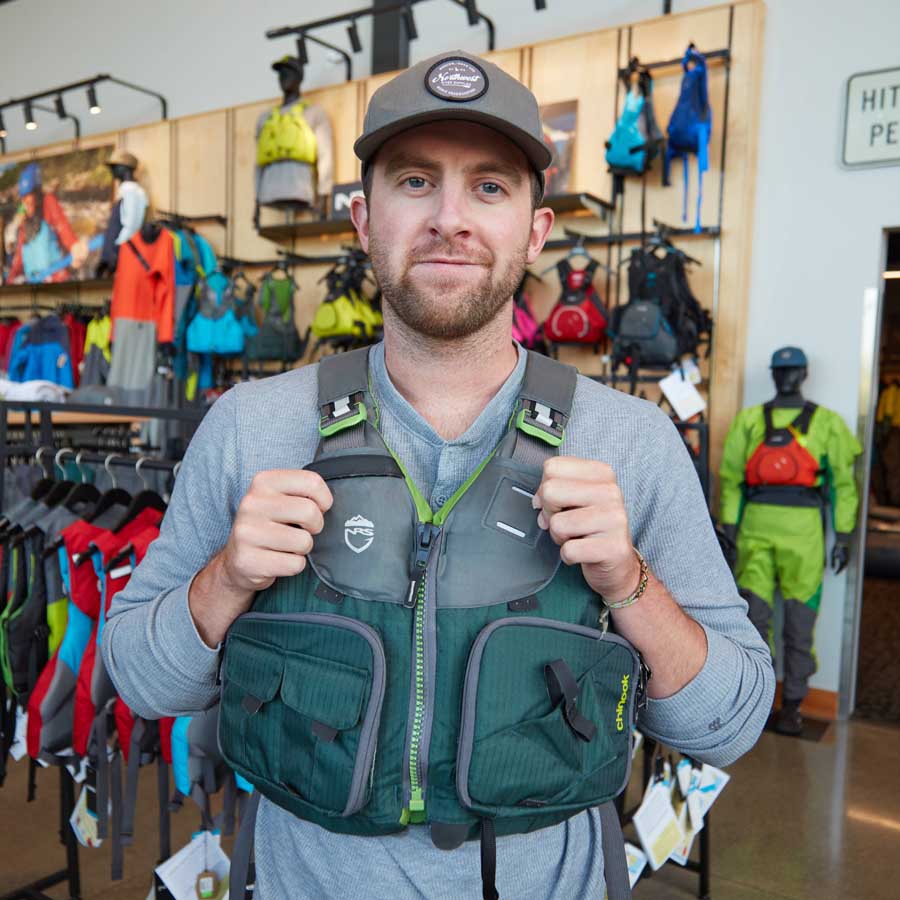
When you can, try on different models to find one that’s comfortable for you. Use the chest sizing guide to pick the right size PFD. And remember, if you’ll be wearing it over cold water/weather apparel; take that extra bulk into account.
How to Fit a Life Jacket for Kids
Fitting children follows the same general rule as fitting adults: a PFD should fit securely (comfortably snug!) without being too tight. If you can’t make the life jacket fit snugly, then it’s too big. If you can’t put it on your child and fasten it comfortably, then it’s too small.
Every PFD manufacturer has its own sizing system, and it’s important to confirm sizing before purchasing any brand of life jacket. Consult the PFD manufacturer’s sizing chart to determine which size PFD your child will need.
NRS life jackets are broken down into three major categories, as shown in the chart below. Where does your child fit?
| Size | Child | Youth | Adult |
|---|---|---|---|
| Chest | 22"–25" | 24"–29" | 30"–58" |
| Weight | 30–50 lbs | 50–90 lbs | - |
Introducing kids to boating safely builds confidence and love for the water. Their safety is in your hands—so fit them well and teach them well.
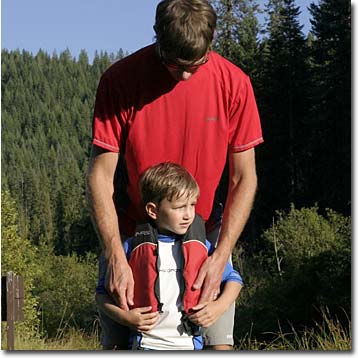
Once you’ve chosen a PFD, let your child try it on and get familiar with it. A pool or calm swimming area is ideal for a first test. Walk your child through fastening zippers and buckles and tightening the straps from bottom to top.
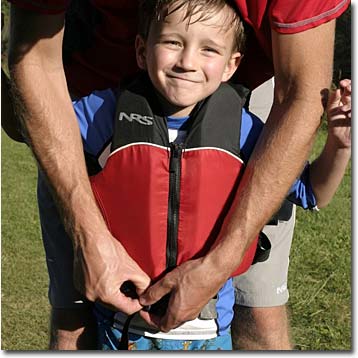
Here, Mark helps Henry zip up the life jacket and fasten the bottom buckle. Next, he’ll show him how to tighten the adjustment straps by pulling forward on both sides at the same time, working from the bottom to the top.
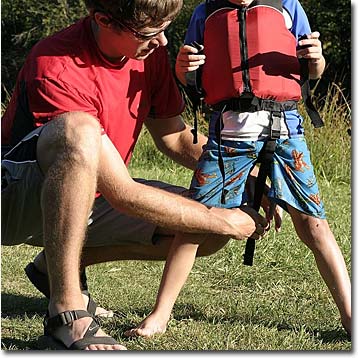
If your child’s PFD has leg straps, they can be adjusted to help keep the life jacket from riding up, but leg straps are no substitution for a good fit. They’re an insurance policy. The life jacket should fit snugly even without them.
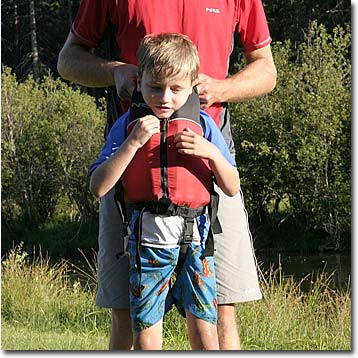
Be sure to test the fit by picking your child up by the shoulder straps. If the chin and ears slip through, then the PFD is too loose.
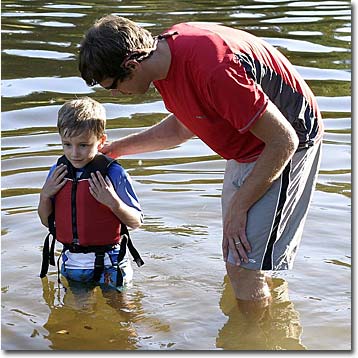
Now it’s time to get wet! Join your child in the water for a test session.

Ensure that the PFD can handle your child’s body weight and that it floats them face up. This is also a great time to practice some safety basics.

Teach your child to remain calm and avoid thrashing about. Teach them how to shift their weight in the water so they’ll float comfortably face up.
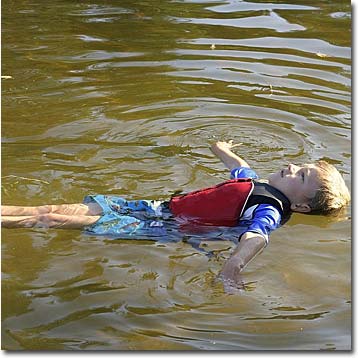
Show them that their life jacket will keep them afloat, that they’re safe and that you’re there to help them.
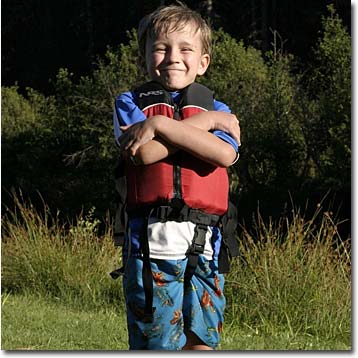
Leading by example helps the most—wear your PFD every time you’re on the water. It reinforces safety habits and shows your child that wearing a life jacket is normal and non-negotiable.
Wearing a PFD when you’re on the water is the single best thing you can do to ensure your safety. Selecting a model that’s comfortable for all-day wear helps ensure that you’ll want to keep it on… all day.
 NRS Gift Card: Always Fits, Always Wanted