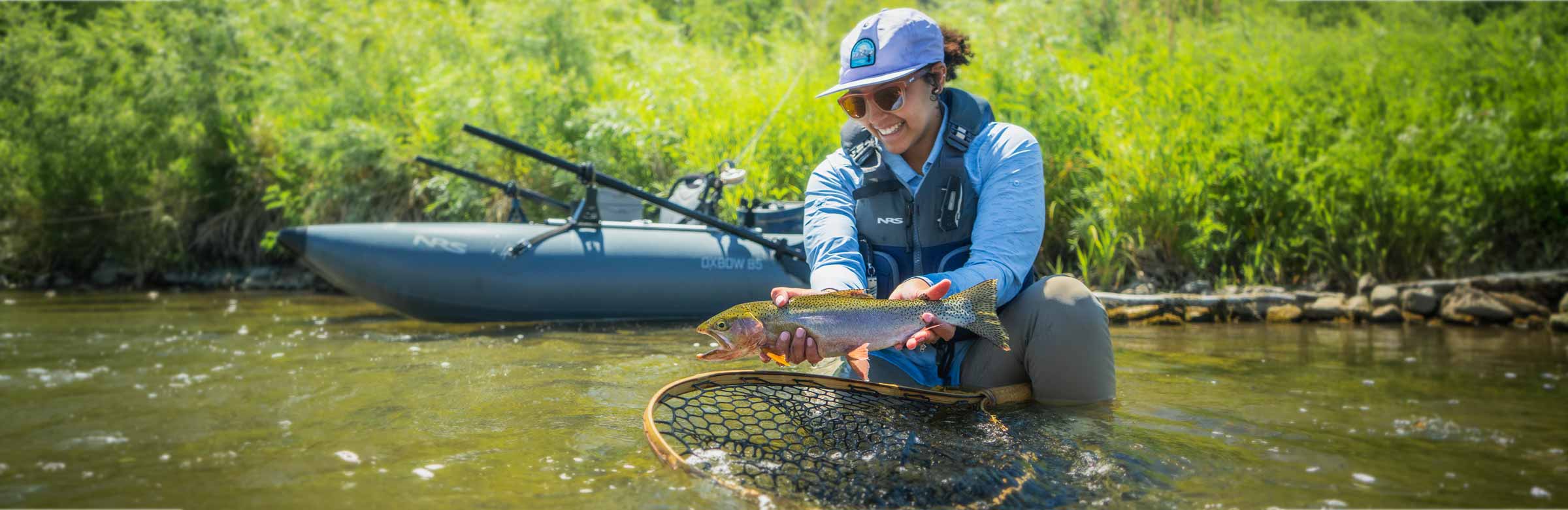
Why Pick a Lightweight Fishing Raft?
From drift boats and canoes to stand-up paddleboards and float tubes, there’s no shortage of options for anglers who want a boat. But for folks who don’t want or need the luxury of a drift boat, things can get murky. What’s the best option for someone who likely fishes alone, but wants the ability to traverse water, explore new fisheries and access fish that rarely see a fly?
Float tubes are small, but they’re a pain to maneuver, and aren’t really suited for fishing on rivers. Stand-up paddleboards are great for flatwater fishing, but if you’ve got to navigate any sort of whitewater, they’re not up for the job.
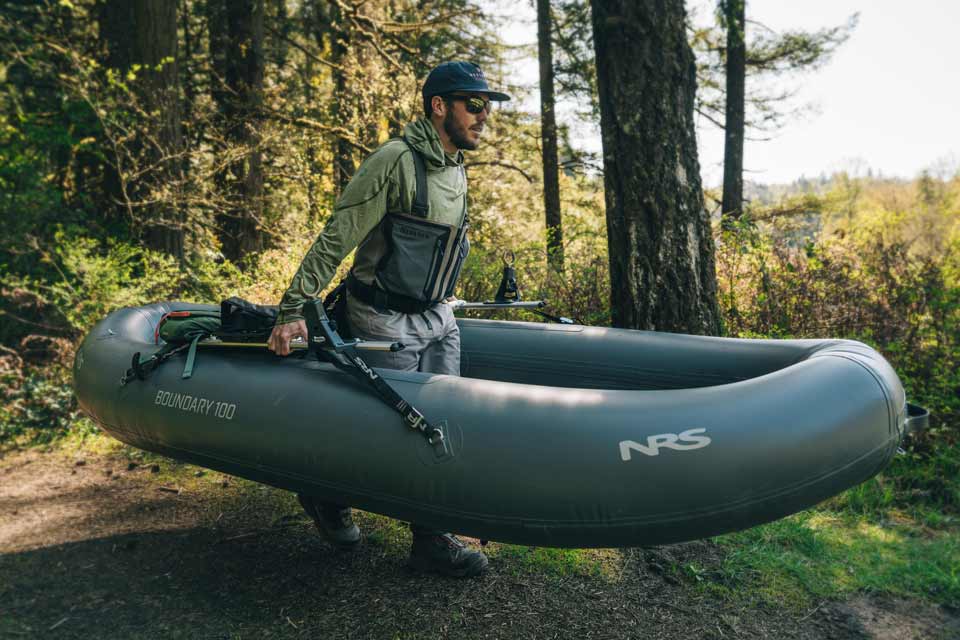
That’s where the unique class of lightweight fishing rafts really starts to shine. These boats are small enough to launch and load by yourself, and they give you the option to explore those high-country lakes or float through that otherwise inaccessible gorge.
Advantages of Lightweight Fishing Rafts
Let’s take a closer look at all the advantages lightweight fishing rafts offer fly anglers.
Access Tons of Water
The biggest draw for a lightweight fishing raft is how much water it lets you access. The right raft will be sturdy enough to handle light whitewater (of the kind often encountered on trout streams) and stealthy enough to cruise across that mountain lake without spooking the fish.
Two Boats in One
A lot of lightweight fishing rafts come with oars so you can maneuver in lighter current, quickly cover distance, or both. But many also have open floors, which means you can stow the oars and operate the boat like a float tube, kicking yourself along with fins. This gives you the best of both worlds when it comes to approaching wary fish without exhausting yourself by needing to kick across the entire lake.
No Trailer Needed
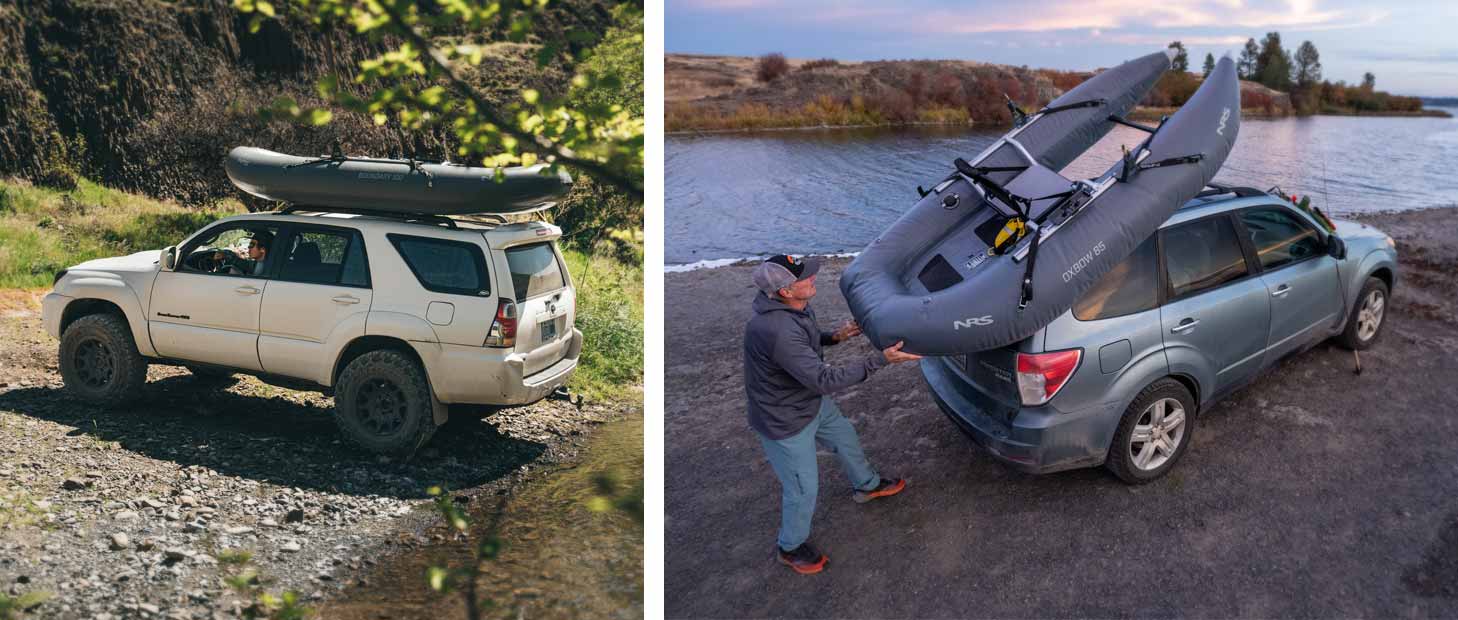
These rafts pack down small enough to fit in your truck bed, and many are small enough to fit in a car trunk. Either way, you won’t need a trailer to haul around your boat. This means you’re not limited to only putting in at boat ramps. Anywhere that you can fit your raft down the bank becomes a potential launch point, opening up even more water for exploration.
Haul Gear
You won’t need to pick between one rod for streamers or dry flies, or compromise with one rod that really doesn’t do either well. With a raft, you’ll have room to bring along extra rods, reels, lines and flies, which means you’ll be able to match the conditions of just about any fishing situation you find yourself in.
Affordability
Lightweight fishing rafts are a fraction of the price of a drift boat. They’re a bit more expensive than most canoes but are exponentially more versatile. And while there are some rafts out there that function like drift boats, they require a trailer for hauling back and forth to the river. The lightweight raft strikes a balance between all those options, in terms of both performance and expense.
So, now that it’s clear how useful these rafts can be for anglers, how do you know which one is best for you? Which features should you prioritize?
The Open Bow vs. Open Floor Debate
To answer this question, let’s look at two recent additions to the NRS lightweight fishing raft lineup: the Oxbow 85 and the Boundary 100.
Oxbow 85
The NRS Oxbow 85 Personal Fishing Raft is on the smaller end of lightweight fishing rafts, with a U-shaped, open-bow design. It’s ideal for lakes, reservoirs and even ponds, but it’ll work on calmer rivers (like the Bighorn in Montana) as well.
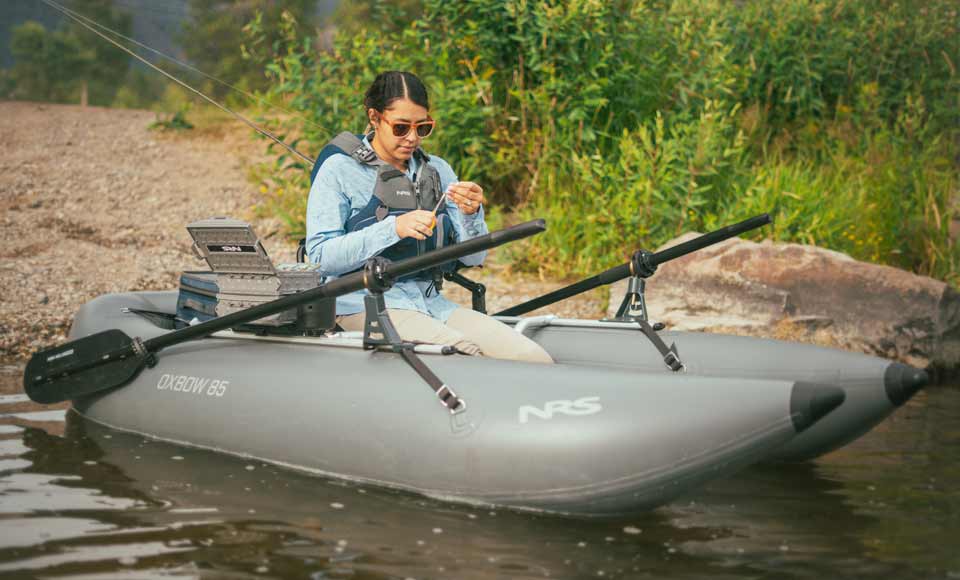
A big advantage of the Oxbow is the craft’s versatility. Simply put, the Oxbow is a genre-buster, combining the rowing capability of a pontoon boat with the convenience of a float tube.
Sturdy frame-mounted oar mounts and a rigid frame mean the Oxbow efficiently powers across lakes and easily handles light current. But when you need to prowl the banks with stealth and precision, you can stow the oars and kick it like a float tube. Or quickly hop out on the bank without having to step over a tube while in pursuit of fish. This gives you the ultimate combination of efficient movement and stealth fishing.
With the Oxbow, you’ll be traveling light, but not empty-handed. The suspended mesh floor in the stern provides space to store gear, and the Slot Rail frame—the same system used on the NRS Approach raft series—works with standard YakAttack or Scotty fishing accessories. From rod holders to gear boxes and coolers, you’ll have plenty of opportunities to add components and keep your gear organized and secure.

For the generalist who likes to kick, drift, wade and row on calmer waters, the Oxbow is a great choice. A bench seat and the inflatable tubes improve sight lines and control compared to a traditional kick boat, but it’s still small enough to transport without a trailer, opening access to non-traditional launch points.
- Open-bow design for maximum stealth.
- Slot Rail frame for endless adjustability and customization.
- Integrated oar rests keep oars out of the way when casting or using kick fins.
- Easy to transport and store.
Add in D-rings for additional gear attachments, integrated carry handles and Leafield C7 valves on its twin air chambers, and the Oxbow is an impressive watercraft bound to impress on a wide variety of waters.
Boundary 100
The NRS Boundary 100 Personal Fishing Raft is a slightly larger craft than the Oxbow, giving anglers additional stability in a more traditional shape designed to take on choppy waters and river rapids with ease. While the Boundary has the versatility to shine on lakes and ponds, rowing something like the Missouri River in Montana is equally achievable and enjoyable.
- Open-floor design for maneuverability and stability.
- Lightweight aluminum Slot Rail frame for efficient rowing and adjustability.
- Gear storage options for day or quick multiday adventures.
- Packs down for easy transport and can even be checked as standard airline luggage.
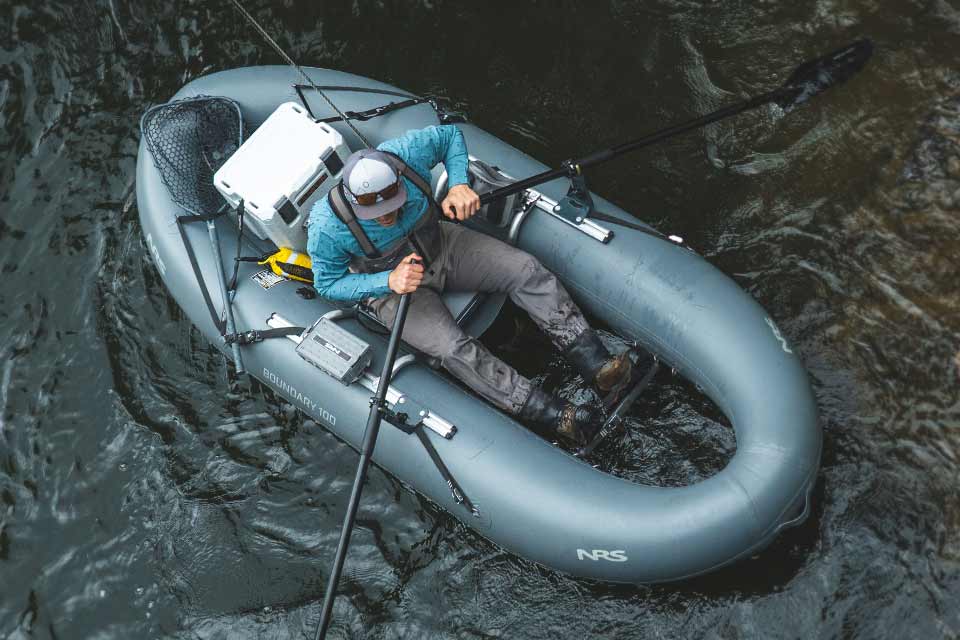
But the Boundary isn’t just built for rivers. With its open-floor design, you can still stow the oars and use this raft just like a float tube. That means you’ll be able to prowl the banks and shallows, targeting wary fish with precision. This would be ideal for sneaking up on carp when they’re feeding in the flats or targeting lake trout when they move into the shallows in early spring.
Like the Oxbow, the Boundary sports sturdy frame-mounted oar mounts to optimize rowing power, and it also has the same Slot Rail frame for mounting YakAttack or Scotty fishing accessories. However, the Boundary’s larger size benefits anyone who doesn’t want to compromise on storage space. A combination of D-rings, fabric lash points and a stern cargo platform expand the amount of gear you can haul, making the Boundary a top pick for day or overnight trips.
For anglers who primarily fish rivers but want the versatility to kick across flats or hop out for quick bank casts, an open-floor design like the Boundary adds extra room (and storage) while giving you the freedom to get creative with where, and how, you fish and launch.
Wrapping Up
If you want to get on the water but need more flexibility and a lighter-weight package than a drift boat, it’s hard to beat what lightweight rafts offer. They’re light and small enough to launch on your own, and nimble enough to crawl into the gnarliest canyons or prowl across the largest lakes you can get to. Pair that with the ability to haul them in your car (removing the need for a trailer) and you’ve got yourself a pretty sweet rig.
The only real question is which size of raft you need, and, most importantly, where you’ll take it for its maiden voyage.

 NRS Gift Card: Always Fits, Always Wanted